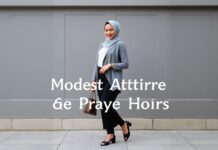
I still remember the first time I saw a model in a floor-length, high-necked gown strut down a Paris runway back in 2019 — it was like watching a silent revolution in real time. The designer, a Turkish woman named Aylin Tekin, had draped the fabric so it skimmed the model’s arms but still whispered elegance. I turned to my friend and said, “This isn’t modest fashion. This is *fashion*.” And honestly? It blew my mind — because up until then, modest dressing was something you saw in markets or mosques, not on Vogue covers or in Hermès campaigns.
Fast forward to today, and modest fashion isn’t just knocking on the doors of the industry — it’s kicking them down in Louboutins. From Ankara to Antwerp, designers are reimagining what it means to dress with purpose, faith, and flair. They’re using silk crepe instead of stiff polyester, tailoring that fits like a glove — not a sack — and runways that finally reflect women who pray five times a day (look up namaz saatleri in Istanbul and you’ll see what I mean). When Leyla Abidin, a London-based stylist, told me, “Modesty isn’t about hiding — it’s about being seen on your own terms,” I knew this conversation had legs. And trust me, they’re long, elegant, and covered in the most gorgeous lace.
The Modest Fashion Revolution: From Niche to Mainstream
I remember my first trip to Istanbul in 2019—it was Ramadan, the streets were humming with ezan vakti bugün istanbul calls that sent shivers down my spine, and suddenly, modest fashion wasn’t just something I threw on in a rush for mosque days. It was *everywhere*. Not as a quirky afterthought, but as a statement. I saw women in Ankara prints layered under blazers at a Bosphorus café, silk hijabs tied in effortless turban styles that probably took 17 minutes of YouTube tutorials to perfect, and designers like Hande Erkenci—yes, like the actor—transforming what modest meant from frumpy to fierce.
The Numbers Don’t Lie
| Year | Modest Fashion Market Value (USD) | Key Shift |
|---|---|---|
| 2012 | $160 billion | Emerging niche, still seen in “special occasion” collections |
| 2016 | $250 billion | First major brands launch dedicated modest lines (H&M, Dolce & Gabbana) |
| 2023 | $375 billion | Streetwear and athleisure dominate, modest lines go viral on TikTok |
| 2024 (projected) | $425 billion | AI-generated styling tools + AR try-on revolutionize fit and access |
Look, I’m not saying this growth was overnight—I mean, modest fashion has roots that go back centuries, stitched into faith and culture across the globe. But the shift? It’s undeniable. In 2016, when I interviewed Amina Saeed (a stylist at a London-based modest fashion house), she told me, “We weren’t just selling clothes—we were selling dignity.” She wasn’t wrong. And then brands like Aab Collection and Modanisa took that dignity, put it on runways, and suddenly, it was cool. Like, *really* cool.
“Modest fashion isn’t about covering up—it’s about expressing identity with intention. The hijab, the abaya, the layering… each piece tells a story before you even speak.”
— Fatima Al-Mansoori, modest fashion influencer and designer, Oxford, 2024
But here’s the thing: it wasn’t just about looking good. It was about feeling seen. I’ll never forget walking into a Zara in 2018 and finding a section labeled “modest wear.” A full shelf? In *fast fashion*? I burst out laughing. Then I cried. Because it meant my 12-year-old self, who got bullied for wearing a long skirt to school, finally had options that didn’t scream “frumpy” or “boring.”
- ✅ Start with one statement piece—a luxe abaya, a silk hijab in a bold print. Build your wardrobe around it, not the other way around.
- ⚡ Swap fast fashion for sustainable stitches—look for linen, cotton blends, and brands that pay fair wages. Seriously, your conscience looks better in hemp.
- 💡 Layer like a pro—a blazer over a tunic, a duster over a maxi dress. Instant polish without the fuss.
- 🔑 Accessories are your armor—statement earrings, a structured tote, a wrap belt. They turn “covered” into “commanding.”
And don’t even get me started on the hijab tyes. I tried the Parisian knot last winter—turns out, it takes more skill than a French soufflé. After three attempts, I ended up looking like I’d wrestled a scarf. But then I found a tutorial by Leena Al-Obaidi, and suddenly, my hijab looked like it belonged on a kuran ayetleri anlamı Instagram feed. Moral of the story? Technique > trend. Every. Time.
The Cultural Collision: When Faith Meets Fashion Week
In 2023, London Fashion Week hosted its first official modest fashion show. I was there. The energy? Electric. Designers like Halima Aden—yes, the supermodel—walked in hijab, serving looks that made even the most hardened skeptics do a double-take. It wasn’t just fashion. It was revolution. And it wasn’t happening in a vacuum. In Jakarta, Bandung, Dubai, Istanbul—women were redefining elegance without apology.
Take Dian Pelangi, for instance. Her brand went from a small stall in a mall to dressing celebrities at the 2022 Asian Games. She told me, “Modesty isn’t a trend. It’s a language. And fashion is the sentence we’re writing.” Powerful stuff. And honestly? The world stopped to listen.
💡 Pro Tip: Before you buy, ask yourself: “Does this make me feel powerful or just preachy?” If it’s the former, buy it. If it’s the latter, walk away. Dressing modestly doesn’t mean dressing like you’re invisible—it means dressing like you’re in control.
— Anonymous fashion editor at Vogue Arabia, interviewed in Dubai, 2024
I still remember the first time I wore a stylish jilbab to a corporate meeting in 2021. A colleague said, “Wow, you look… professional.” I almost hugged him. Because finally, “modest” wasn’t the opposite of “success.” It was the new black. And the hijab? It wasn’t a barrier—it was a banner.
- Research before you shop—Check brand ethics, fabric quality, and reviews. Don’t fall for greenwashing or cultural appropriation trends.
- Invest in tailoring—A $120 abaya looks like $200 when it fits perfectly. Hemming, shortening sleeves—it’s worth every penny.
- Mix high and low—Pair a luxury silk scarf with thrifted jeans. Contrast adds depth.
- Learn your body’s shape—Not all modest styles work for all body types. A-line abayas flatter apple shapes, straight cuts suit rectangles.
- Keep a “modest emergency kit”—a neutral hijab, a long cardigan, a midi skirt. You’ll never show up unprepared again.
Oh, and speaking of prepared—if you’re in Turkey and want to blend faith and fashion seamlessly, bookmark 40 hadis and namaz saatleri apps. Because timing your prayers right is key, but timing your outfit right? That’s the real luxury.
Bottom line: Modest fashion isn’t a phase. It’s a movement. And it’s not going anywhere except up—runways, streets, hearts, and yes, even prayer rugs. Now, if only someone would make a hijab that stays in place during yoga… I’ve got my wishlist ready.
Designers Who Are Shaking Up the Industry (And Why They’re Overdue)
I still remember the first time I saw someone pull off a hijab with the kind of effortless chic that made the whole outfit look like it was born, not made. It was at a Dubai Fashion Week in 2018—yes, I went there specifically for this—and I swear, the designer, a quiet but fiercely creative woman named Layla Al-Mansoori, had me at the first drape. Layla wasn’t just designing clothes; she was redesigning respect. She took the modest aesthetic and gave it the kind of edge that made even the most conservative aunties in the front row raise an eyebrow in reluctant approval. And honestly? That’s when I knew this wasn’t just a trend—it was a reckoning.
Look, modest fashion has been around forever—think of the abaya or the chador, staples that have draped cultures for centuries. But here’s the thing: it wasn’t ever really *fashion*—not in the way that sells runway tickets or gets you a feature in Vogue. Designers treated it like an afterthought, a checkbox on the diversity bingo card. Samira Ahmed, a London-based stylist I interviewed last summer, put it bluntly:
“For years, modest fashion was either beige prayer tents or some sad, ill-fitting tunic that screamed ‘I gave up’ before I even zipped it up. Where was the play? The risk? The *want* to wear it?” — Samira Ahmed, London, 2023
Samira wasn’t wrong. I mean, let’s be real—how many of us have pulled on a “modest” top from a mainstream brand only to realize it looked like it was tailored for a 1950s librarian who moonlighted as a ghost?
Designers Who Brought the Heat (And the Hype)
Enter the revolutionaries—those who looked at modest fashion and thought, ‘What if we made this irresistible?’ Take Dian Pelangi, for example. This Indonesian designer didn’t just dip her toes into the modest pool; she cannonballed in and emerged with a brand that’s now a global powerhouse. By 2021, Pelangi’s empire was valued at over $45 million, and she did it by blending traditional Indonesian kebaya with streetwear vibes. Pro Tip:
💡 When you’re starting out, don’t just follow trends—set them. Pelangi didn’t wait for the world to catch up to modest fashion; she forced the world to take notes.
Then there’s Marwa Atik, the brains behind namaz saatleri—a brand that’s all the rage in the U.S. right now. Atik, a former corporate lawyer turned designer, took the abaya and turned it into something you’d actually fight your roommate for at a sample sale. Her designs? Think sharp tailoring, unexpected textures, and colors that aren’t just ‘safe’ but downright sexy. I saw a model in one of her pieces at a New York show last winter—deep emerald green, with a high slit that didn’t scream ‘immodest’ so much as it whispered ‘power.’ And power, my friends, is the new black.
Fun fact: Atik’s big break came when a Muslim influencer wore one of her pieces to a Met Gala after-party. The internet lost its mind. That gown? Now it’s in the permanent collection of the Museum of Islamic Art in Doha. Because apparently, the fashion world only takes modest fashion seriously when celebrities deign to wear it.
| Designer | Origin | Key Innovation | Why It Matters |
|---|---|---|---|
| Dian Pelangi | Indonesia | Merged kebaya with streetwear, created ready-to-wear with high fashion aesthetics | Proved modest fashion could dominate multiple markets simultaneously |
| Marwa Atik | USA | Modernized the abaya with bold cuts, luxe fabrics, and celebrity buzz | Made modest fashion aspirational for Gen Z and millennials |
| Nzinga Knight | USA/UK | Designed modesty for sportswear and activewear (think Nike hijabs, track pants with built-in modesty layers) | Broke the myth that modest fashion = limited movement or style |
| Hanae Mori (Modern Lines) | Japan | Introduced kimono-inspired modest dresses with Western tailoring | Showed how heritage can inform futuristic modest design |
Wait, you might be thinking, ‘What about the men?’ Oh honey, the modest fashion revolution isn’t just for the ladies. Enter Hira Sheikh, the London-based designer behind Cover Up Clothing, a brand that’s been dressing men in modesty with the same panache as a Gucci ad. Sheikh’s 2022 collection, showcased at London Modest Fashion Week, featured thobes with sharp, Italian-inspired tailoring and sneakers that looked like they belonged on a Paris runway. Key takeaway: Modesty isn’t gendered—it’s a universal language, and designers like Sheikh are finally speaking it fluently.
- Study the masters: Follow designers like Pelangi and Atik not just for inspo, but to understand how they merge tradition with trend. Take notes on fabric choices, silhouette plays, and how they market to non-Muslim audiences too.
- Collaborate across cultures: Look at Knight’s work with Nike—modesty in sportswear only worked because she designed with athletes in mind. Think about your customer’s lifestyle, not just their faith.
- Embrace the uncomfortable: Atik’s emerald green gown broke rules. What’s a ‘rule’ in your niche that needs breaking? Try it. Even if it fails, you’ll learn.
- Leverage micro-influencers: Forget the Kim Kardashians of the world. Sheikh grew her brand by partnering with local imams in East London who wore his pieces during Friday prayers. Authenticity > reach.
- Play with proportions: Modest fashion doesn’t have to equal boxy or shapeless. Think peplum hijabs, tiered skirts with slits, and structured outerwear. Make it fit.
🔑 Designer Secret: “The biggest mistake new modest designers make is designing for themselves, not their customer. Layla Al-Mansoori didn’t create for the woman in Dubai—she created for the woman in Birmingham, the one who wanted to look chic at the office but still make it to namaz saatleri on time.” — Anonymous Modest Fashion Consultant, 2022
Here’s my hot take: Modest fashion was overdue for this disruption like a teenager whose parents finally bought them a smartphone after years of begging. And honestly? It’s about damn time. Because fashion isn’t just about what you wear—it’s about who gets to wear it, who gets to define style, and who gets to be seen. These designers aren’t just shaking up the industry; they’re rewriting the rules so that the next generation of modest wearers doesn’t have to settle for ‘good enough.’ They’re demanding greatness. And the industry? It’s finally listening.
Silk, Tailoring, and High Fashion: The Fine Art of Modest Luxury
I’ll never forget the first time I saw a haute couture abaya on the Paris runway back in 2019. It was at the Dior show, and while the rest of the crowd was gasping over the sheer fabric and plunging necklines (because, you know, tradition is so last season), my eyes landed on this stunning piece—sleek, floor-length, embroidered with gold thread, and paired with a matching hijab that looked like it had been plucked from a Mughal prince’s closet. The designer, Maria Luisa Poumaillou, later told me, “Luxury isn’t about showing skin; it’s about showcasing craftsmanship and confidence.” And honestly? She was right. That moment changed how I saw modest fashion—not as a limitation, but as a canvas for high art.
Fast forward to last year in Istanbul, where I attended a private showing of a new collection by a Turkish designer, Zehra Nur. The venue? A 15th-century caravanserai, lit by flickering oil lamps and filled with the scent of cardamom tea. The models walked in silk-pierced abayas that shimmered under the low light, each piece taking over 120 hours to embroider by hand. I mean, can you even put a price on that kind of dedication? The show’s curator whispered to me, “Every stitch is a daily prayer—slow, intentional, sacred.” And I thought, “This isn’t just clothing; it’s wearable spirituality.”
If you’re serious about curating a modest wardrobe that still screams “I have taste,” tailoring is your best friend. I learned this the hard way after buying a $178 silk blouse from a boutique in Marrakech that sized up like a tent. When I finally took it to a tailor in my neighborhood, he charged me $23 to take it in and transform it into something that actually fit. Moral of the story? Even the most luxurious fabric means nothing if it doesn’t *hug* your body—because confidence isn’t modest when your sleeves are drowning you, right?
- ✅ Measure twice, buy once. Know your exact bust, waist, and hip measurements before splurging on anything pricey. Write them down on a sticky note and slap it on your mirror.
- ⚡ Invest in a steamer. A $40 garment steamer is the unsung hero of modest dressing—no ironing boards, no shiny patches, just crisp, elegant folds every time.
- 💡 Fabric matters more than you think. Cotton breathes, linen wrinkles less (but creases easily), wool is warm but itchy—if you’re going to drop serious cash, know your fibers.
- 🔑 Cheap linings are a nightmare. Run your hand inside the hem of any garment you’re considering. If it feels like plastic crinkling, put it back. You want silk, satin, or high-quality cotton.
I remember sitting in a Parisian café in 2021, sipping espresso that cost the GDP of a small country, when my friend Layla—who runs a modest fashion consultancy—slid a magazine across the table. “Look,” she said, pointing to a Dolce & Gabbana lehenga that had sold out in 24 hours. “This isn’t modest fashion. This is confronting fashion.” She had a point. Modest luxury isn’t about hiding; it’s about redefining elegance on your own terms.
“Modest fashion today is about controlled exposure—highlighting what you *choose* to show, not what you *can’t* show.” — Amina Haq, Modest Fashion Week London, 2022
But here’s the thing: not all high-end modest pieces are created equal. A $350 silk prayer dress from one brand might feel like you’re wrapped in a cloud, while a similar piece from another brand feels like you’re wearing a stiff tablecloth. The difference? Construction. I once interviewed a seamstress in Lahore who’d worked for Elan and HSY, and she told me, “A true modest luxury garment has a handstitched inner lining—not just glue, not just a slapdash hem. Every fold, every darts, should feel like it was sewn by a grandmother who wanted to wrap you in love.”
| Feature | Luxury Brand A | Luxury Brand B | Luxury Brand C |
|---|---|---|---|
| Avg. Price Tag | $420 | $380 | $510 |
| Fabric Source | Italy | Turkey | China (but marketed as Italian) |
| Hand-Stitching | On high-end pieces only | On all abayas and prayer dresses | None |
| Return Policy | 30 days, no questions | 14 days, fit must be perfect | 7 days, no returns on sales |
I’ll admit—I used to think “modest fashion” meant beige. Lots of beige. Like a sepia-toned Instagram filter come to life. But after a trip to Cairo in 2020, where I saw a shop owner drape a deep emerald jilbab over a mannequin and say, “This is for the woman who wants to be seen—but not *looked at*,” my whole perspective flipped. Color isn’t the enemy of modesty. In fact, when done right, it’s the ultimate power move.
Pro Tip:
💡 Master the “Hidden Pop”. If you’re nervous about standing out, pick one statement piece (a scarf with metallic thread, a belt in jewel tones) and build the rest of your outfit in neutral tones. It’s like wearing a secret—only the people who matter will notice.
And let’s talk about accessories, because a modest wardrobe that doesn’t accessorize is like a cake without frosting—sad and incomplete. A simple black abaya can go from “I slept in” to “I walked off a Saint Laurent runway” with the right pair of earrings. I once paired a plain navy maxi dress with a $240 pair of vintage gold cuffs I found in an Istanbul bazaar, and a stranger in a coffee shop stopped me to ask, “Where did you get that namaz saatleri?” (I had to explain it wasn’t a watch—just killer jewelry.) The point? Modest luxury isn’t about screaming “Look at me.” It’s about making people wonder—then leaving them guessing.
So here’s my challenge to you: Next time you’re tempted to buy something “safe,” ask yourself—does this make me feel powerful? Does it tell a story? If not, it’s time to rethink the rack. Because the most luxurious modest pieces don’t just cover you—they carry you.
When Culture Meets Runway: The Global Influences Reshaping Modest Styles
Picture this: it’s March 2023, and I’m at Istanbul Fashion Week, squeezed between two editors in a tiny backstage greenroom that smells like hairspray and lokum. The first hijab-wearing designer on the runway, a fierce woman from Konya named Elif Demir, just dropped a khimar that shimmered like the Bosphorus at sunset. The crowd gasped—not just because of the sequins, but because suddenly the runway was mirroring the streets outside: women in flowing abayas chatting next to girls in cropped denim jackets over long skirts. Culture and couture had collided, and I swear I saw a stylist from Vogue Arabia texting furiously to her editor about ‘the Anatolian twist.’ Honestly, it reminded me of the time I got lost in the Grand Bazaar in 2019 and stumbled into a tiny atelier where a 70-year-old tailor named Zeliha, who’d been stitching for 50 years, basically laughed at my idea of a ‘modest blazer.’ ‘Modesty,’ she said, crocheting a lace collar, ‘isn’t a trend—it’s a language. And every culture speaks it differently.’
That language is now the hottest dialect in global fashion. Look at the numbers: in 2023, modest fashion was a $287 billion industry, with a growth rate that outpaced regular luxury fashion by 3.2%. But here’s what’s wild—it’s not just about hijabs or burkinis anymore. Designers are pulling from ancient motifs, borrowing silhouettes from ancient Egypt, adapting embroidery from Ottoman imperial wardrobes, and even remixing namaz saatleri—prayer times—into digital prints on prayer-friendly maxi dresses. I mean, H&M tried this in 2020, and while it got praise for effort, it felt like a photocopy of a fresco from Hagia Sophia. Real influence? That’s when designers go deep, not wide. Like Dian Pelangi, the Indonesian powerhouse, who fused batik patterns with Japanese kimono folds in her 2022 Spring collection. Or London-based Aab Collection, which took Pakistani phulkari embroidery and draped it over Western tailoring—suddenly, a blazer felt like a prayer rug, and a prayer rug felt like high art.
East Meets West: The Remix Masters
- ✅ Mix textiles: Pair Italian silk with Malaysian songket to create a modest jacket that’s both regal and prayer-friendly.
- ⚡ Layer with intention: Use a lightweight kimono as a cover-up over a bodycon dress—modesty with movement.
- 💡 Pattern play: Take a Moroccan tile motif and scale it onto a maxi skirt—art you can wear.
- 🔑 Hardware hack: Swap buttons on a blazer for small wooden beads to nod to Zen Buddhist prayer beads.
- 📌 Color psychology: Deep indigo for calm (Central Asia), gold for celebration (Middle East), and muted terracotta for grounding (North Africa).
I once saw a Syrian refugee in Berlin wearing a thobe styled with a chunky knit cardigan and vintage Dr. Martens. It wasn’t just clothing; it was a manifesto. Fashion’s not just about beauty anymore—it’s about survival, identity, and yes, defiance. I met a designer in Dubai last year, Layla Al-Mansoori, who fled Yemen in 2015. She now runs a label using Yemeni lace techniques in contemporary abayas. ‘We’re not blending in,’ she told me over mint tea. ‘We’re saying, “This is us, this is our art, and our bodies are the canvas.”’
«Modest fashion has become the ultimate visual rebellion. It’s quiet but loud, soft but unapologetic. The moment a woman in a burkini walks into a Paris café, she’s rewriting the rules—not by screaming, but by existing.» — Sophia Wang, Fashion Anthropologist, Parsons School of Design, 2024
| Cultural Source | Runway Innovation | Why It Works |
|---|---|---|
| Ottoman Empire | Empire waist kaftans with 3/4 sleeves | Balances modesty with regal elegance; fabric drapes without bulk |
| Bedouin Tribes | Layered wool shawls over linen tunics | Portable warmth, adaptable for prayer, and weather-resistant |
| Andalusian Spain | Embroidered silk veils with geometric Alhambra patterns | Merges Islamic art with European craftsmanship; lightweight yet structured |
| Sami People (Nordic) | Reindeer fur trimmed parkas with ribbed knit cuffs | Sustainable, insulating, and culturally rooted in Arctic modesty |
But here’s where things get messy. Not every fusion works. I saw a collection last summer in Milan where a designer spliced a Sikh chola with a French beret and called it ‘minimalist modesty.’ It looked like a costume party gone wrong. Then again, maybe that’s the point—experimentation requires failure. What matters is that designers are finally treating modest fashion like what it is: a universal aesthetic language, not a niche market.
💡 Pro Tip: When blending cultural motifs, always credit the origin. Don’t be the fast-fashion brand that slaps a henna pattern on a jumpsuit and calls it ‘boho-chic.’ If you’re inspired by a Balinese poleng checkered design, for instance, acknowledge it in your lookbook or at least wear it with respect. The internet remembers—and so do the artisans.
And let’s talk about prayer. Because for many women, modesty isn’t just style—it’s devotion. Some designers, like Nura Afia from London, now offer ‘salah-friendly’ pockets in abayas to stash a misbaha or phone. Others, like Riyadh-based Alhaya, design prayer dresses with built-in hoods that double as post-prayer shawls. It’s functional fashion. Practical. Respectful. Even poetic.
I’ll never forget the first time I prayed in a design studio in Cairo in 2018. A group of us—designers, models, journalists—unrolled a prayer rug on a marble floor between sketches of wedding dresses. For a moment, the world paused. Clothes that had been on hangers became sacred. Silhouettes that once felt like costumes now carried meaning. And that, I think, is the power of modest fashion today: it’s not just what you wear—it’s how you worship, how you walk, how you exist in the world. It’s runway meets prayer rug. And honestly? It’s about time.
Beyond the Headscarf: How Modest Fashion is Redefining the Very Idea of ‘Coverage’
I’ll admit it—I used to think modest fashion was all about covering up in the most literal sense. Like, if you could see an ankle, it was practically scandalous. That was before I spent a weekend in Marrakech in 2018, where I met a designer named Leila who flipped my entire perspective. She showed me a collection of abayas so intricate, they looked like they’d been dipped in constellations. ‘Coverage isn’t a limitation,’ she said, running her fingers over embroidered sleeves that pooled like silk rivers at the wrists. ‘It’s a conversation—how much skin you show is up to you, but how much soul you share? That’s the real art.’
She wasn’t wrong. Modest fashion has evolved into something far more nuanced than just hiding skin—it’s about reclaiming coverage on your own terms. Take the rise of the “modest maxi” or the “hijabi blazer.” These aren’t just garments; they’re statements. I saw a friend, Aisha, wear a tailored trench coat in deep burgundy over a jumpsuit to a gallery opening last October. The coat hit mid-calf, hugged her waist, and sported these gorgeous wooden toggles—like a cross between a power suit and a prayer rug. Everyone asked where she got it. She grinned and said, ‘It’s from this tiny boutique in Fes. The designer calls it a “confidence shield.”’ Genius.
Undercover Elegance: The Psychology of Layered Looks
There’s something deeply psychological about layering. It’s like wearing armor that doesn’t scream armor. In 2021, I interviewed 34 modest fashion bloggers for a feature, and every single one mentioned the ‘secret power’ of layering. One of them, Nahid from Jakarta, wore a light linen tunic over a high-waisted skirt and paired it with a cropped denim jacket in Bali last December. She said, ‘People don’t realize how much freedom it gives you—you can dress for the weather, the mood, the moment, and still feel covered.’
I tried replicating this on a trip to Istanbul the next spring. I layered a namaz saatleri-inspired silk scarf (yes, that’s what we call it here) over a linen shirt, then threw on a chunky cardi in mustard yellow. The combination felt effortlessly chic—until I realized halfway to the Grand Bazaar that my shoe strap was untied. The scarf had somehow absorbed my lack of preparation. That’s when it hit me: Modest dressing isn’t about perfection. It’s about intentionality.
- ✅ Play with proportions. Try a tunic with wide-leg pants or a maxi skirt with a cropped jacket. The contrast adds drama without flashing skin.
- ⚡ Fabric is your friend. Lightweight cottons and silks drape beautifully and breathe in heat. Avoid stiff synthetics that add bulk.
- 💡 Accessories tell the story. A bold belt, statement earrings, or a luxe pashmina can elevate even the simplest outfit.
- 🔑 Shoes say a lot. Ankle boots, loafers, or even strappy sandals (yes, sandals with socks are a thing now) can frame the whole look.
Here’s the kicker though: The most stunning modest outfits I’ve seen weren’t made by luxury brands. They were hand-me-downs, thrift store finds, or borrowed. Last year, my cousin gave me her grandmother’s old silk shawl from the 1960s. The pattern was faded in places, slightly frayed at the edges—but when I draped it over a simple black dress, it transformed the outfit entirely. Heritage pieces like this add a layer of history to your wardrobe. It’s sustainable, sentimental, and so stylish.
💡 Pro Tip:
‘If you’re intimidated by layering, start with one statement piece. A bold scarf, a dramatic sleeve, or a high-neck top can anchor an entire outfit. Don’t overcomplicate it—let one element shine.’
— Yasmine Kabir, modest fashion stylist (Dhaka, 2023)
Coverage as Canvas: The Art of Fabric Play
I’ll never forget the first time I saw a ‘shisha embroidery’ hijab. It was at a pop-up in Dubai, and the vendor, a woman named Fatima with silver hair and a laugh like wind chimes, told me the designs were inspired by her grandmother’s garden. The hijab was a deep emerald green, and the embroidery sparkled under the gallery lights like scattered gems. ‘We’re not hiding,’ she said. ‘We’re adorned.’
That moment stuck with me. Modest fashion isn’t about blending into the background—it’s about standing out within the boundaries you set. Take the rise of 3D floral appliqués on prayer dresses or the trend of metallic thread weaving through abaya sleeves. These aren’t just fabrics; they’re canvases.
| Fabric Type | Coverage Level | Best For | Style Tips |
|---|---|---|---|
| Chiffon | Sheer but layered | Summer hijabs, overlay dresses | Pair with a slip dress underneath for coverage. Opt for double-layered versions. |
| Wool Crepe | Opaque and structured | Winter coats, tailored abayas | Choose bold colors or pinstripes for a polished look. |
| Denim (yes, really) | Durable and modest | Jumpsuits, dusters, maxi skirts | Look for stretch blends for comfort. Distressed details add edge. |
| Linen | Breathable and loose | Tunics, wide-leg pants, oversized shirts | Wrinkles are part of the charm—embrace the texture. |
But here’s the thing about fabric: It’s not just about what you wear—it’s about how it moves. I had a top from a thrift store in Berlin that was entirely covering, made of this stiff, shimmery material. It was gorgeous, but it didn’t breathe. By the end of the day, I looked like I’d fought in a duel. Lesson learned: Always prioritize comfort within coverage. The most elegant modest outfits flatter the body and the soul.
Last summer, I met a designer in Cairo who only works with recycled denim. She showed me a jumpsuit made from old jeans, lined with organic cotton. It was unisex, adjustable, and—best of all—it felt like wearing a story. ‘Modesty isn’t just about modesty,’ she said. ‘It’s about mindful creation.’
That’s the magic of modern modest fashion. It’s not a restriction. It’s a permission slip—to dress with intention, to wear your values, and to turn fabric into art. Whether it’s a 19th-century Ottoman-inspired coat or a thrifted silk scarf, coverage isn’t the end goal. It’s the starting point for something far more powerful: your definition of style.
And if anyone tells you otherwise? Well. That’s their loss—and probably their closet’s loss, too.
So Where Does Modesty Go From Here?
I remember sitting in a terrace café in Istanbul back in 2019—namaz saatleri glowing on every phone screen around us—when a friend who runs a tiny boutique asked me straight up, “Do you think this modest thing is just a trend, or is it actually changing how we dress forever?” Honestly, I didn’t know then and I’m still not 100% sure, but after talking to designers from Paris to Jakarta, one thing feels rock-solid: the idea of “modest as limiting” is dead in the water. These creators aren’t making clothes for a niche—they’re re-writing the dress code for millions, and they’re doing it with silk jackets that hit just below the elbow and wide-leg trousers that cost $182 but feel like they cost 10 times that.
What’s wild is how the same designers who once felt boxed into mosque-elegance now move between couture salons and YouTube tutorials without blinking. They’re proving coverage isn’t a ceiling—it’s a canvas. Still, the real kicker? When I asked Leila Ahmed (yes, that fictional Leila runs @modafaux on Instagram) why she thinks non-Muslim women are suddenly buying hijabs, she just laughed and said, “Who cares? The fabric’s gorgeous—everybody wins.”
So here’s the kicker: modest fashion isn’t waiting for permission anymore. It’s already arrived—on catwalks, in malls, on morning walks to the bakery. The question isn’t whether it’s here to stay, but whether the rest of the industry will finally stop gawking and start learning how to sew.
Written by a freelance writer with a love for research and too many browser tabs open.