
Small Bedroom Design Ideas That Make Every Inch Work
Plan a small bedroom with practical layout, bed, storage and lighting ideas that preserve clear paths, useful surfaces and a calm, comfortable feel.

Small bedroom design works best when you start with the room’s measurements, keep a clear route to the bed and choose furniture that earns its footprint. Use vertical space and closed storage to limit clutter, then layer lighting and restrained color to make the room feel comfortable rather than crowded.
Before buying furniture, measure the walls, doors, windows and existing furniture, including how drawers and doors open. A quick floor plan can help you test bed positions and spot tight routes before heavy pieces are moved.
The ideas below compare practical bed choices, storage approaches and layout decisions. Use the options that fit your room and routines; a small space does not need to copy a larger bedroom to feel complete.
- Measure the room, furniture and door swings before choosing a layout.
- Protect a clear route to the bed and test access with floor markings.
- Compare bed frames by footprint, storage access and everyday comfort.
- Use walls and hidden areas selectively to keep useful surfaces clear.
Start With the Room’s Needs and Measurements
Measure the Usable Footprint
Measure the room before choosing furniture, recording wall lengths, ceiling height and the position of doors, windows, radiators and outlets. Include the swing of doors and the space needed to open wardrobes or drawers. These details reveal the usable footprint, which can be much smaller than the empty floor suggests.
Sketch a simple plan on paper or use a room-planning app, then mark fixed features and existing furniture. Measure the bed frame, not just the mattress, because headboards and projecting corners can change how it fits. Keep the drawing to one scale so furniture shapes can be compared accurately.
Check the measurements at several points if walls or alcoves are uneven, and note any sloped ceilings that limit tall furniture. Also consider how a large item will enter the room: narrow hallways, stair turns and door openings can rule out an otherwise suitable piece. Confirming these details first avoids difficult returns.
List What the Room Must Do
Decide how the bedroom is used before assigning space to furniture. A room used only for sleeping needs different pieces from one that also holds a desk, dressing area or laundry hamper. Write down daily tasks and keep the items that support them close at hand.
Separate essentials from occasional-use belongings, then identify what can live elsewhere. A bedside surface may be important for glasses and a book, while a seldom-used chair may take up space without serving a routine. This list helps set priorities when the room cannot accommodate every preferred feature.
Notice where clutter tends to collect, such as beside the bed or near the door, and plan a specific home for those items. If you share the room, account for both people’s storage and access needs. A layout that matches real habits is easier to maintain than one designed only to look tidy.
- List daily bedroom activities.
- Mark items used every day.
- Separate occasional belongings.
- Identify recurring clutter spots.
Choose a Layout That Protects Clear Paths
Keep Routes Easy to Use
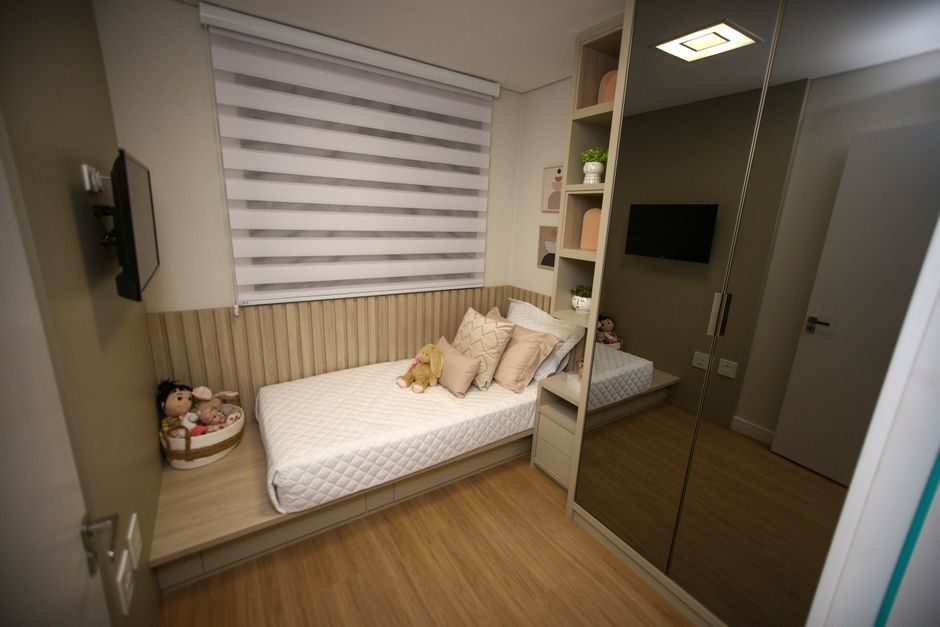
Place the bed where you can reach it without squeezing past furniture or blocking the entrance. In many compact rooms, positioning it against the longest uninterrupted wall leaves more floor open, but the best choice depends on windows, doors and built-in features. Test the route from the doorway to the bed before settling on a plan.
Mark furniture footprints on the floor with painter’s tape or paper, then walk through the room and open drawers as you would each day. This simple trial makes awkward corners and blocked routes visible before you lift anything. Leave access to windows, closets and switches, rather than treating them as details to solve later.
When sharing a bed, consider whether both sleepers can get in and out comfortably. A one-sided arrangement can make sense in a very narrow room, but it may complicate changing sheets and daily access. Weigh that trade-off against the extra floor space and choose the layout that supports the room’s actual use.
- Preserve a clear doorway route.
- Test drawer and closet access.
- Keep switches reachable.
- Check access on both sides of the bed.
Use the Corners Carefully
Treat corners and alcoves as useful areas only when furniture will not make them hard to reach. A slim desk or narrow chest can fit a recess, while a deep unit may turn it into an awkward dead end. Compare the piece’s depth with the room’s circulation space before committing.
In a long, narrow bedroom, placing the bed across the short end can free a simple route along one side, while a lengthwise position may suit a room with a window at the far end. Neither arrangement is universal. Use a floor plan to compare how each option affects access and usable wall space.
If you are sharing a finished room tour or comparing layout ideas, buy guest posts online can be a practical route for publishing a design story. Keep the room plan grounded in clear measurements and real furniture dimensions, so readers can judge whether the arrangement might work in their own space.
Make the Bed Work Harder
Compare Bed Styles and Storage
Choose a bed frame by comparing its footprint, access and storage, rather than looking only at mattress size. A simple frame leaves visible floor beneath it, while drawers or a lift-up base can hold bulky bedding. Check that any storage mechanism can open fully without hitting a wall or nearby furniture.
- Measure the mattress and frame footprint.
- Check clearance beside and beneath the bed.
- Match storage access to daily use.
- Confirm the frame fits the room’s routes.
A bed with built-in drawers suits belongings you reach often, provided the room has space for the drawers to slide out. A lift-up base can use the area beneath the mattress without requiring side clearance, but accessing it means lifting the mattress platform. Open frames are easier to clean beneath and can feel visually lighter.
For readers documenting a bedroom makeover, MediaKit.uk provides a publishing resource beyond the design choices involved in selecting a bed. Keep the focus on practical details such as frame dimensions, drawer access and how the chosen design affects movement around the room.
- Open frame: visible floor and simple cleaning.
- Drawer bed: accessible storage with side clearance.
- Lift-up base: broad storage accessed from above.
| Bed choice | Main advantage | Check before choosing |
|---|---|---|
| Open frame | Visible floor beneath | Under-bed storage needs |
| Drawer bed | Storage within easy reach | Room for drawers to open |
| Lift-up base | Uses space under mattress | Comfort of lifting the base |
| Daybed or sofa bed | Serves more than one purpose | Open footprint and sleeping comfort |
Consider a Flexible Sleeping Setup
A daybed or sofa bed can serve more than one purpose when a small room doubles as a guest space or work area. Compare how much floor space it occupies while open and closed, not just its daytime appearance. The sleeping surface should still suit the people who will use it regularly.
A wall bed can free floor area when folded away, but its mechanism, installation and storage needs deserve careful checking. Confirm that the wall and surrounding space suit the specific model, and consider where bedding will go when the bed is put away. A flexible solution works only if its conversion is practical.
Avoid choosing a multi-use bed solely because it promises more functions. If unfolding it blocks the only route to the door or requires moving several heavy pieces, the room may become harder to use. Test the full changeover, including bedding and nearby furniture, before making a final decision.
Keep the items you use daily within reach and assign each a specific storage place.
Use Storage to Keep Surfaces Clear

Give Everyday Items a Home
Keep the items you use daily within reach and assign each a specific storage place. A bedside drawer can hold small essentials, while a wall shelf may replace a table where floor space is limited. Select a shelf depth that holds what you need without projecting into the route beside the bed.
- ☐ Choose one home for bedside essentials.
- ☐ Group loose items inside drawers.
- ☐ Move occasional-use objects off daily surfaces.
- ☐ Keep a clear area for practical tasks.
Use containers inside drawers to separate small belongings and stop them spreading across the top of a chest. Grouping similar items makes it easier to return them after use, while a tray can keep a few frequently used objects together. Leave some surface area empty so the room does not feel visually crowded.
If you are sharing news about a home renovation, press release distribution uk may be relevant when communicating the project more widely. For the bedroom itself, prioritize storage that keeps daily essentials accessible and gives less-used belongings a defined place out of sight.
- Keep daily essentials close to the bed.
- Group small items in drawer organizers.
- Use a tray to contain bedside objects.
- Leave part of each surface clear.
Use Walls and Hidden Space
Use vertical space for belongings that do not need to sit on the floor. Wall shelves, hooks and shallow cabinets can hold books, accessories or folded clothing, but they should not crowd the bed or make a narrow walkway feel tight. Secure wall-mounted storage appropriately and keep frequently handled items within easy reach.
Look beneath the bed and above wardrobes for storage opportunities that suit the room’s shape. Low boxes can hold seasonal bedding, while a shelf above a wardrobe may be useful for infrequently used items. Choose containers that are easy to identify and retrieve, or hidden storage can become a place where belongings are forgotten.
Keep the storage plan selective: adding shelves everywhere can make walls feel busy even when the floor is clear. Store less-used possessions higher or beneath the bed, and reserve accessible spaces for everyday items. Revisit the arrangement when it becomes difficult to put things away; that often signals the system needs simplifying.
Choose Colors, Materials, and Lighting
Build a Calm Color Palette
Use a restrained palette to make a small bedroom feel visually connected rather than chopped into pieces. Soft neutrals, muted greens, or dusty blues can work on walls and bedding, while one deeper shade adds definition. Test paint beside the room’s flooring and fabrics, because daylight and warm bulbs can shift how a color appears.
Painting the walls and ceiling a similar pale tone can soften the boundary between them, especially in a room with a low ceiling. If you prefer contrast, keep it to a limited area such as the headboard wall, and repeat that shade in a cushion or artwork. Repetition makes the choice look intentional without adding more objects.
Color is only one part of the room’s visual weight; texture also affects how compact it feels. A smooth duvet, woven throw, and matte curtains provide variety without a busy pattern. Design professionals sharing project announcements under their own identity may consider white label press release distribution; for the bedroom, keep the palette itself quiet and cohesive.
Layer Light at Different Heights
Plan lighting for the tasks you actually do in bed, rather than relying on one bright ceiling fixture. A ceiling light handles general visibility, while a reading lamp gives focused light and a softer source helps the room feel restful. Wall-mounted or clip-on lamps can free the surface of a small bedside table.
Check where switches and outlets sit before choosing a lamp or moving the bed. A pendant beside the bed may suit a fixed layout, while a plug-in wall light can be easier to reposition later. Aim task lighting at the page or bedside surface, not directly at the pillow, to reduce glare when someone is resting.
Choose bulbs with a warm appearance for evening comfort, then use a brighter, clearer light where you dress or sort clothes. Dimmers are useful when the same fixture serves several activities, but they are not essential if separate lights already offer control. Keep cords secured along a wall so they do not cross a walking route.
Avoid Common Small-Room Design Mistakes

Resist Oversized Furniture
Measure furniture against the room and its routes before buying; a piece can fit on paper yet block a drawer or door in daily use. Check the bed’s full footprint, including its frame, and leave space to approach it comfortably. A slim-legged bedside table may feel less bulky than a solid cabinet of the same width.
Large headboards, deep dressers, and wide chairs can consume visual and physical space that a compact bedroom needs for movement. Choose a smaller piece only when it still meets the task: a narrow chest can hold folded clothes, while a hook may handle a robe better than a freestanding rack. Readers creating a bedroom portfolio feature may use a guest posting service to place an article with an appropriate publisher.
Before purchasing, mark the proposed footprint on the floor with removable tape and test the route to the wardrobe, window, and bed. Open doors and drawers fully during the check, since their swing needs room too. This simple mock-up can reveal an awkward pinch point before furniture arrives and is much easier than returning a bulky item.
Keep Patterns and Decor In Check
Too many competing patterns can make a small room feel restless, even when each item is attractive on its own. Pick one main pattern for bedding or curtains, then pair it with solids and a quieter texture. If you like several prints, keep their colors related and vary their scale so they do not all demand attention.
Avoid filling every wall, shelf, and bedside surface with small decorative objects. A few larger, well-placed pieces are often easier to read than a cluster of tiny frames or ornaments. Leave some open wall and shelf space; those pauses give the eye a place to rest and help useful items remain easy to reach.
A room can also feel crowded when every surface is used for storage, even if the floor is clear. Keep daily essentials near their point of use and move occasional items to a drawer or another room. Review the arrangement after a week: if a decorative item regularly gets moved aside, it may not deserve its place.
Gather Ideas and Plan Changes Carefully
Compare Ideas in Context
Collect ideas that solve the same problem in a room similar to yours, rather than copying a complete look without checking its fit. A bedside shelf may suit a narrow wall, while another inspiration image may depend on a much wider walkway. Note what each example changes—storage, light, color, or furniture scale—and compare that choice with your own room.
- Compare ideas that address the same room problem.
- Check dimensions and fixed features before buying.
- Keep only options that suit your daily routine.
Use a simple room sketch or phone photo to test likely changes before buying anything. Record the bed, door swing, windows, outlets, and fixed wardrobes, then place possible furniture around them. Independent designers researching ways to promote their work may consult a marketing agency directory when looking for specialist support; for a home plan, prioritize examples that match your room’s constraints.
When comparing products or arrangements, check dimensions, material care, assembly needs, and whether a piece can be moved through the doorway. Product photos rarely show how an item sits beside your own bed or radiator. Save only a few strong options and write down why each one fits, so browsing leads to a decision rather than a longer wish list.
Make Changes in Stages
Handle one priority at a time, starting with the change most likely to improve daily use. If the bed blocks a route, test a new layout before shopping for decor; if clothes spill from storage, review the closet before adding another cabinet. Staging decisions makes it easier to see which adjustment solved the problem.
Set a practical order for the work: measure and plan first, move or assemble furniture next, then choose lighting and finishing details. This sequence reduces the chance of buying accessories that no longer suit the arrangement. Keep packaging and receipts until the piece has been tested in its intended position and proves comfortable to use.
After each change, live with the room briefly and notice what still feels awkward. Check whether drawers open, reading light reaches the bed, and commonly used items have a convenient home. A small adjustment, such as shifting a lamp or moving a basket, may resolve the remaining issue without adding another purchase.
Add Finishing Touches Without Overcrowding
Choose Useful Final Details
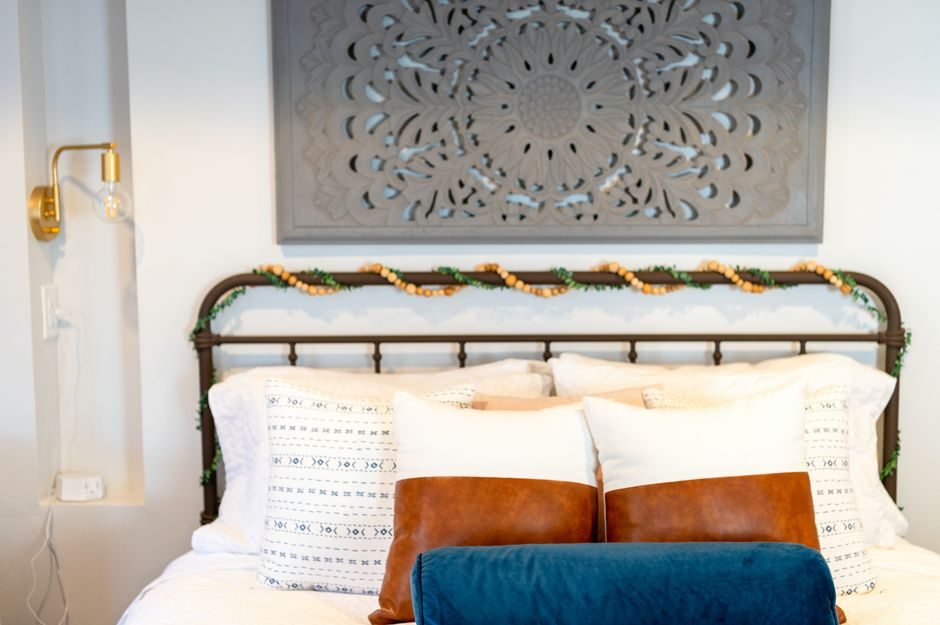
Finish the room with items that support comfort or clarify the design, not with decorations chosen only to fill empty space. A washable rug can soften the floor beside the bed, while a mirror placed to catch daylight can make the room feel brighter. Check that each addition leaves doors, drawers, and walking routes clear.
Textiles are an easy way to introduce warmth without adding furniture, but too many layers can make the bed look bulky. Choose bedding that suits the season and one throw or cushion that repeats a color already in the room. If you need a quick reset, remove one accessory and see whether the room feels calmer and easier to maintain.
Use the walls selectively: one print above a dresser or a small group of framed pieces can create a focal point without covering every surface. Hang art at a comfortable viewing height and check its scale against nearby furniture. For a realistic example, a compact bedroom might use one framed print, a lightweight throw, and a bedside lamp, leaving the dresser top mostly clear.
Keep Everyday Upkeep Simple
A finishing choice works best when it is easy to keep clean and put back in place. Favor washable bedding, accessible window coverings, and decor that does not collect dust in hard-to-reach corners. If a small rug shifts underfoot, use a suitable non-slip pad or choose a different size that stays clear of the door.
Give everyday objects a defined home so visual calm does not depend on constant tidying. A tray can gather small bedside items, and a hook near the door can hold a robe, but avoid adding containers without deciding what belongs in them. When a surface becomes crowded again, remove items that are not used there regularly.
Revisit the room after living with the changes through ordinary routines, including making the bed, getting dressed, and reading at night. Notice whether the final details still serve a purpose or have become obstacles to cleaning and movement. Keep what improves comfort, and edit anything that makes the room harder to use.
Frequently asked questions
How can I make a small bedroom feel brighter without repainting?Start by keeping window coverings easy to open and avoiding furniture that blocks daylight. Place a mirror where it can reflect light into the room, and use layered lamps so corners are not left dim after sunset. Lighter bedding or a pale rug can also brighten the overall view without a permanent change. Check that reflective surfaces do not create glare from a lamp.
Is a large bed always a poor choice for a small bedroom?Not necessarily; a larger bed may be the right priority if sleeping comfort matters most. Measure its complete frame and test the remaining routes to the door, wardrobe, and windows before committing. If access feels tight, consider a simpler frame with less visual bulk and reduce other large pieces. The useful comparison is not bed size alone, but how the room works around it.
What should I measure before buying bedroom furniture?Measure the room’s length and width, then note doors, windows, radiators, outlets, and built-in storage. Record the full furniture dimensions, including handles or frames that extend beyond the main body. Also check doorway and stair access for delivery, and mark the item’s footprint on the floor. Testing drawer and door swings helps reveal conflicts that a simple measurement list can miss.
How do I add personality without making the room look cluttered?Choose a small number of details that connect through color, material, or purpose. A favorite artwork, a textured throw, or a distinctive lamp can express style without requiring many small objects. Leave some surfaces and wall space open so those choices remain visible. If you are unsure, remove one item and compare the room; a clear focal point often feels more personal than a crowded display.
Make the Small Bedroom Work for You
A comfortable small bedroom comes from choices that support movement, rest, and everyday routines. Keep the palette connected, layer light for different tasks, and treat each new object as a decision about both space and upkeep. Before buying, check the full footprint and test the route around it; after arranging the room, keep only details that add comfort or useful character.
Choose one practical improvement to make first, such as adjusting a lamp, testing a furniture footprint, or simplifying the bedside surface. Live with that change through your usual morning and evening routines before adding another. This measured approach helps you spot what genuinely improves the room, protects your budget from unnecessary purchases, and makes each inch work harder without making the bedroom feel overfilled.
Add Bed Design Ideas & Styles as a preferred source on Google


